Campus events have always run into the same three walls: noise complaints from neighboring dorms or residential areas, permit requirements for amplified music in outdoor spaces, and budgets that can't cover proper PA equipment. Student committees spend half their planning time on workarounds for these problems.
The silent disco format sidesteps all three at once — and with LekSync, you don't even need a rental budget to run one.
What Makes Silent Discos Different
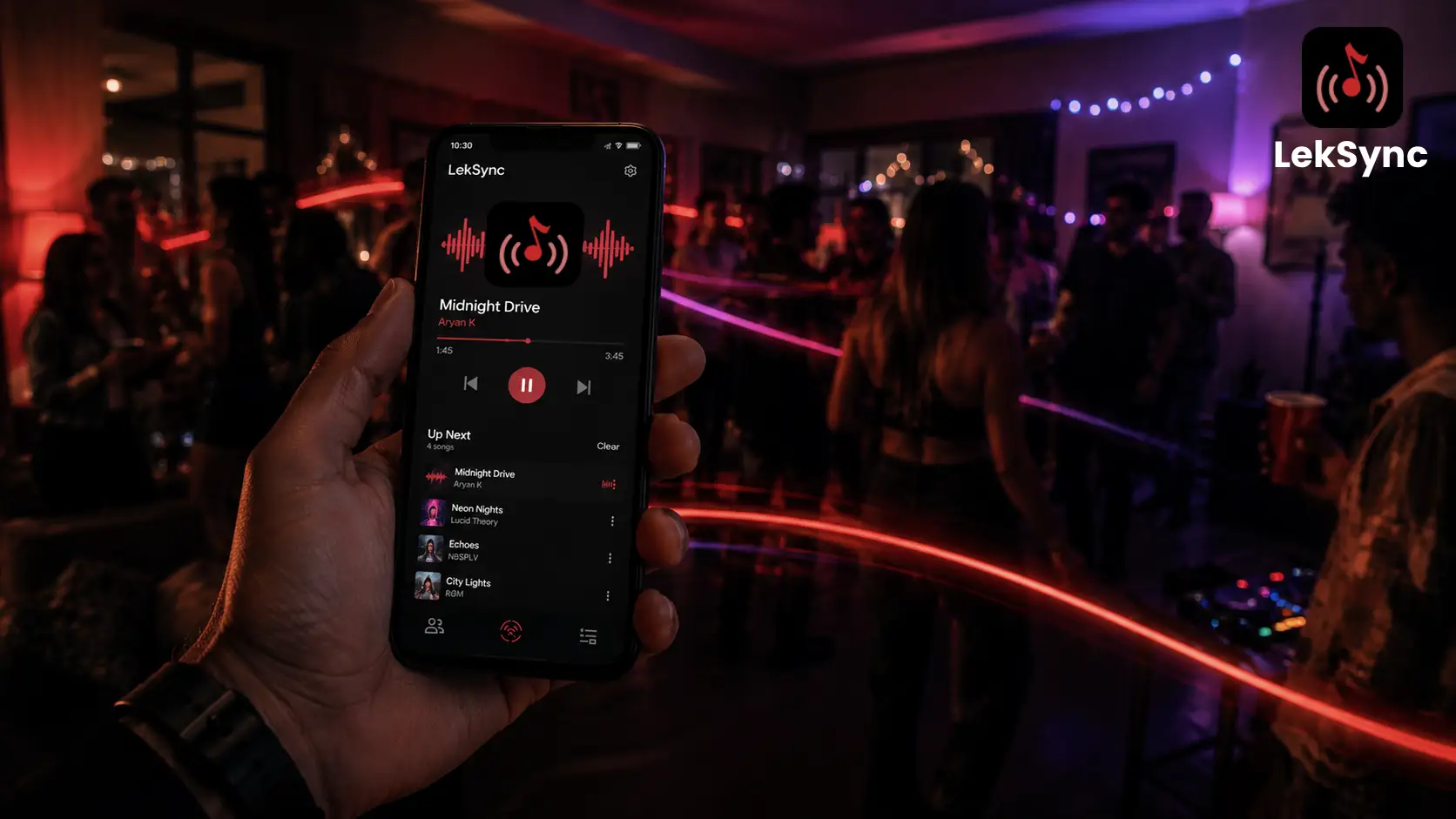
A silent disco is an event where attendees dance or gather to music delivered through personal headphones rather than a loudspeaker system. From the outside — people dancing in silence, or mouthing lyrics with nothing audible — it looks surreal. From the inside, it's one of the most immersive event formats possible: everyone hears the music at their own volume, the audio is crystal clear, and there's a strange collective energy to dancing to something only you can hear.
The key differences from a standard music event:
- No venue noise restriction — the event makes almost no sound to the surrounding environment.
- No amplification permit needed — nothing is being amplified in the traditional sense.
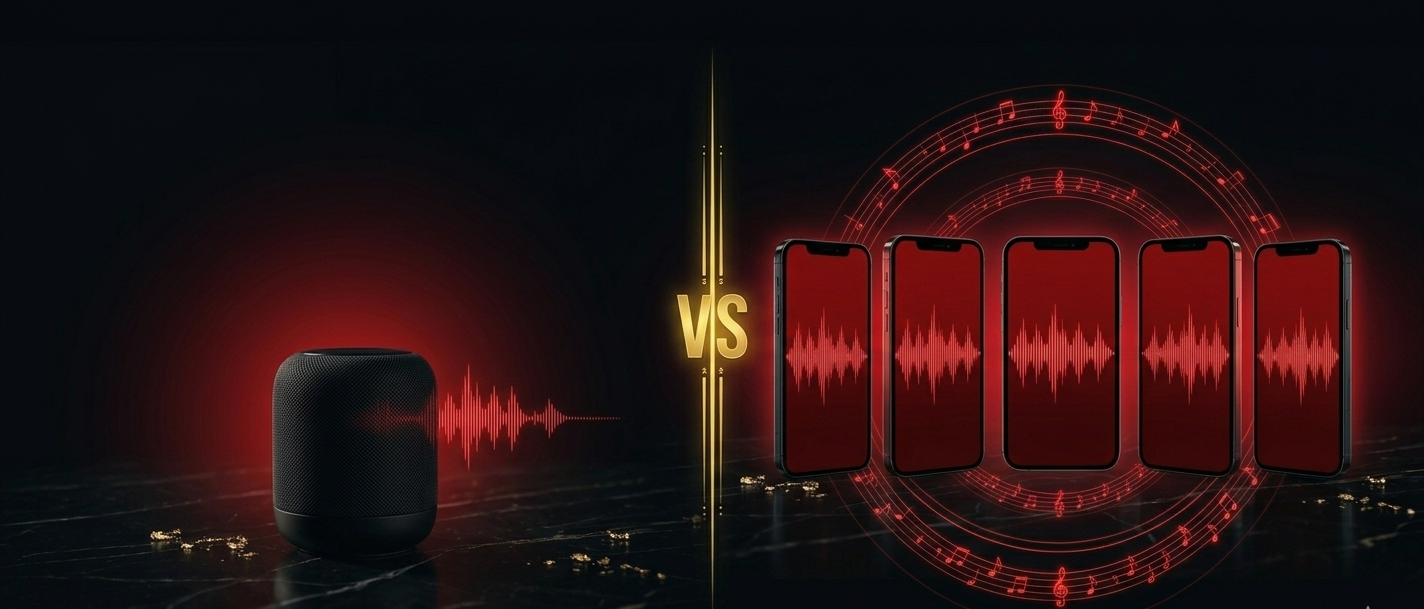
- No PA system or speaker rental — the hardware is what attendees already own.
- Personal volume control — each attendee sets their own level. Nobody has to shout over the music.
Why This Fits Campuses Specifically
Noise ordinances don't apply
University campuses are governed by decibel limits and curfews that kill outdoor events by 10pm. A silent disco operates below any noise threshold — the music isn't in the environment, it's in the headphones. This means you can run an event in a courtyard at midnight, in an atrium adjacent to a library, or in any space where a traditional music event would be shut down.
Zero permit complexity
Amplified music events on campuses typically require venue permits, insurance documentation, and administrative approval weeks in advance. A silent disco, with no amplified sound, often falls below the threshold that triggers this process. Check your campus policies — most student unions find silent discos require nothing beyond the standard event approval process.
Works in non-traditional spaces
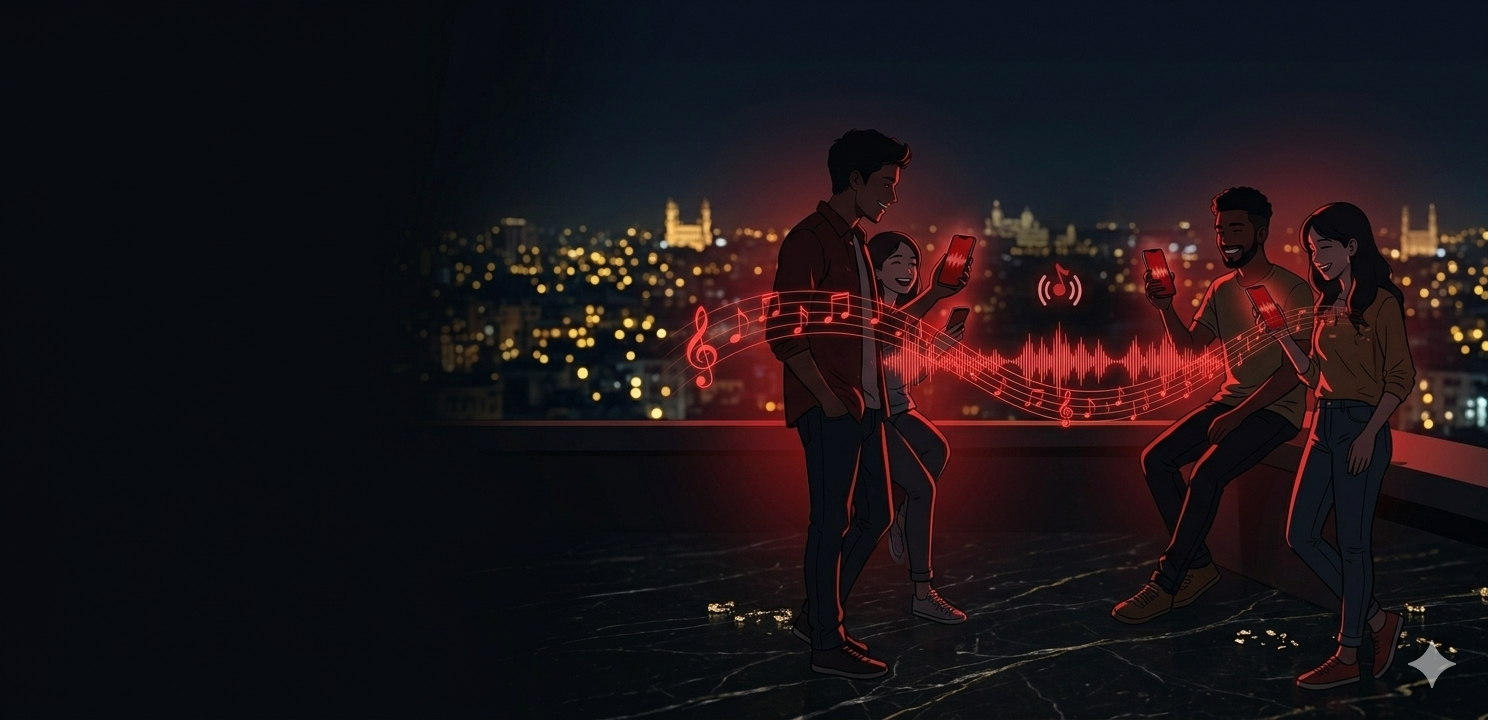
A terrace, a reading room, a museum gallery after hours, a rooftop, a corridor — spaces that would never be approved for a loud music event work perfectly for a silent disco. The constraint goes from "we need a proper venue" to "we need a space where people can gather."
Inclusive for diverse attendees
Students who are sensitive to loud environments — including those with sensory processing differences or anxiety around crowds — can participate at their own volume, or remove their earbuds entirely and stay in the social environment without being overwhelmed by sound.
How to Run One With LekSync
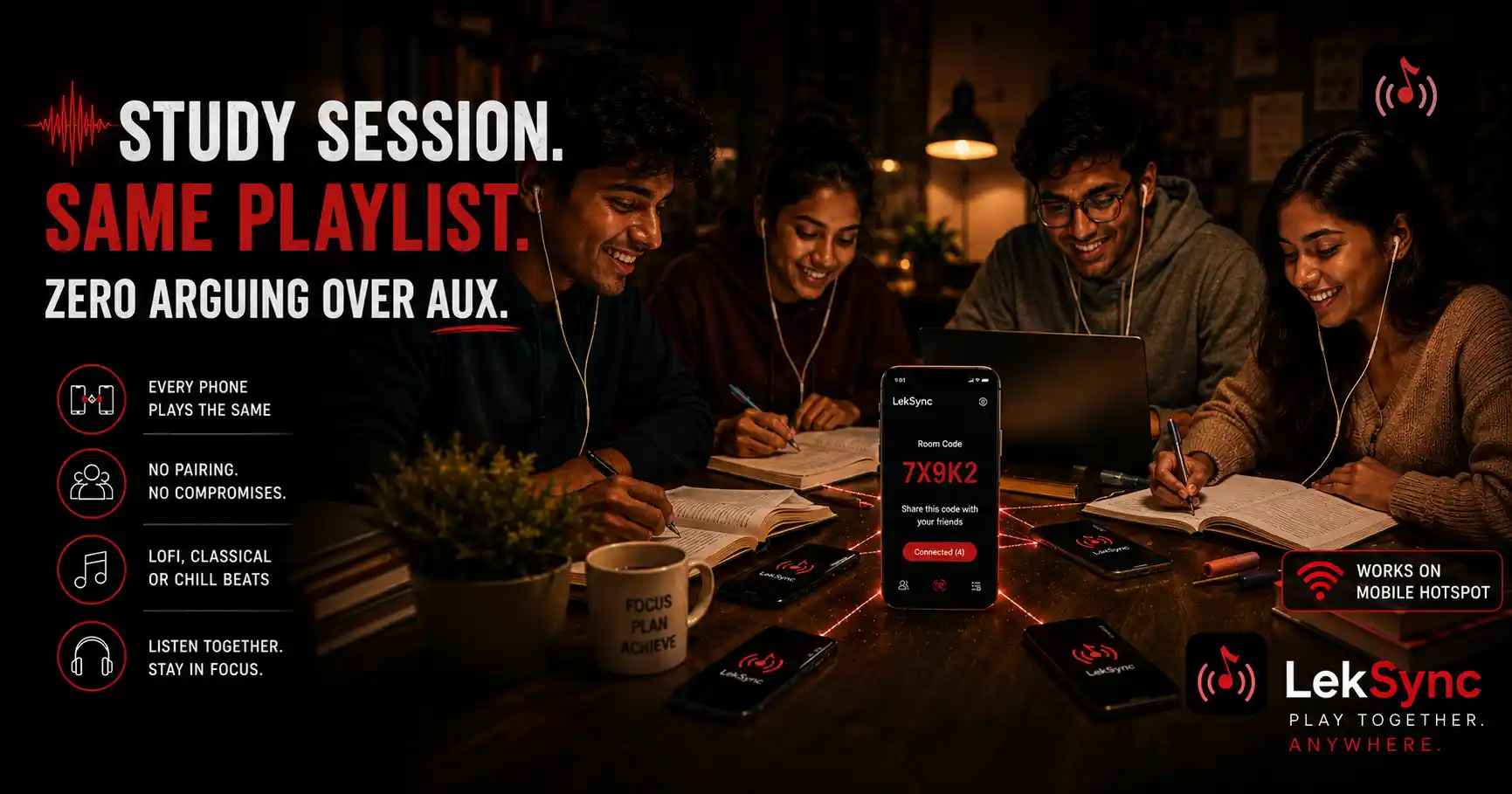
You don't need rented RF headphones or specialized equipment. Here's the student organizer's setup:
What you need
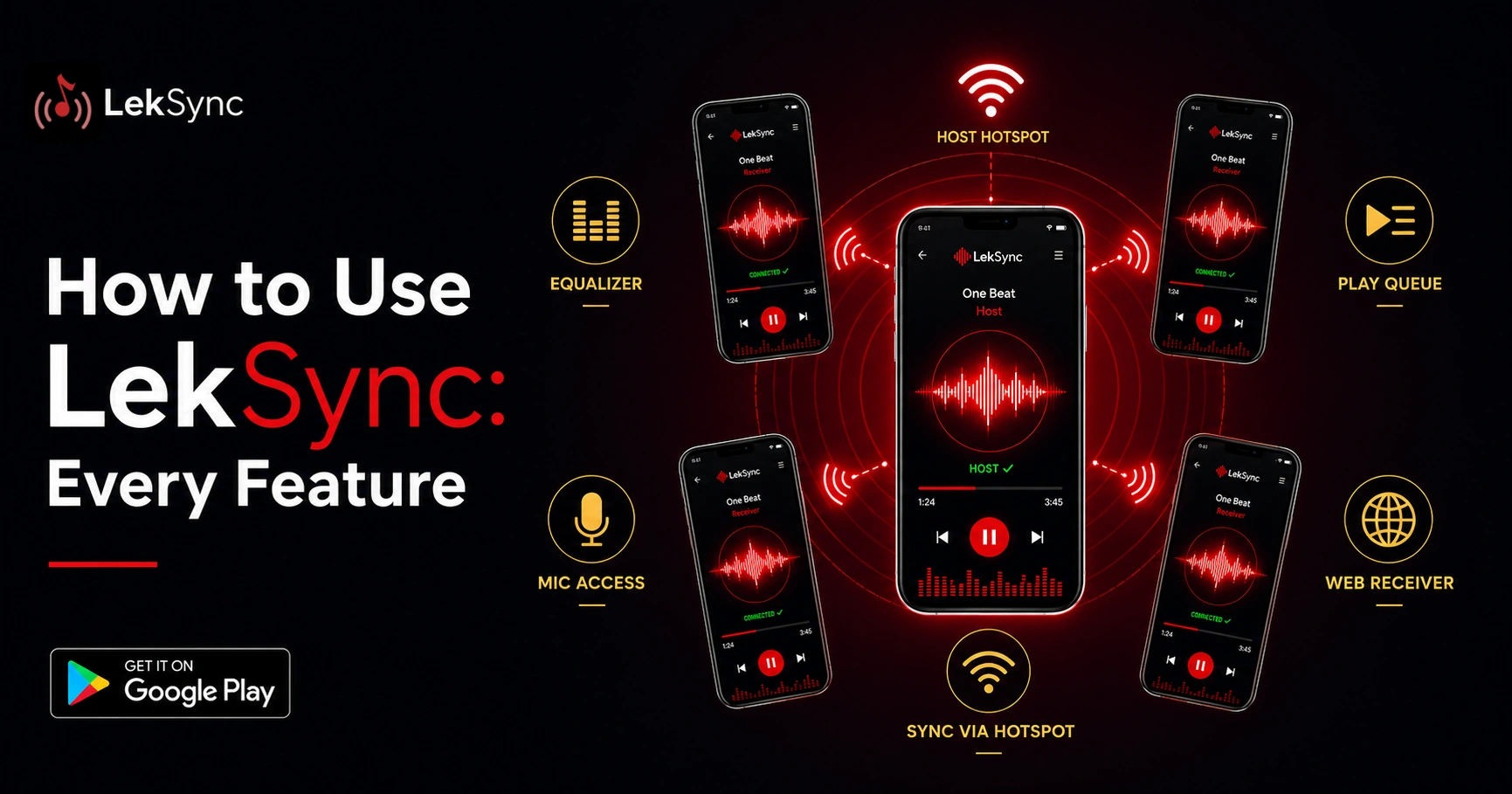
- One Android phone with your playlist (the host DJ phone)
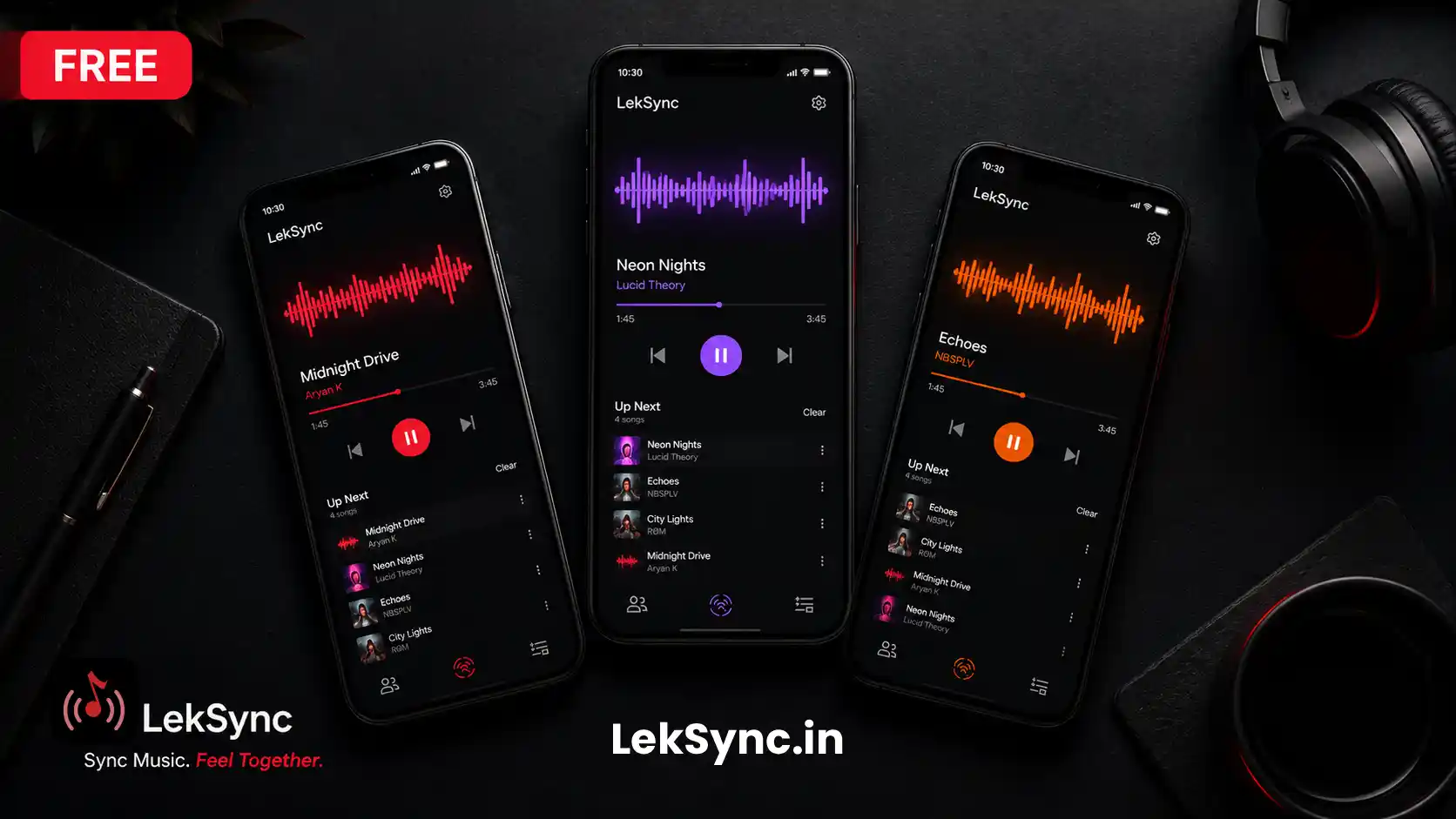
- LekSync installed on the host phone
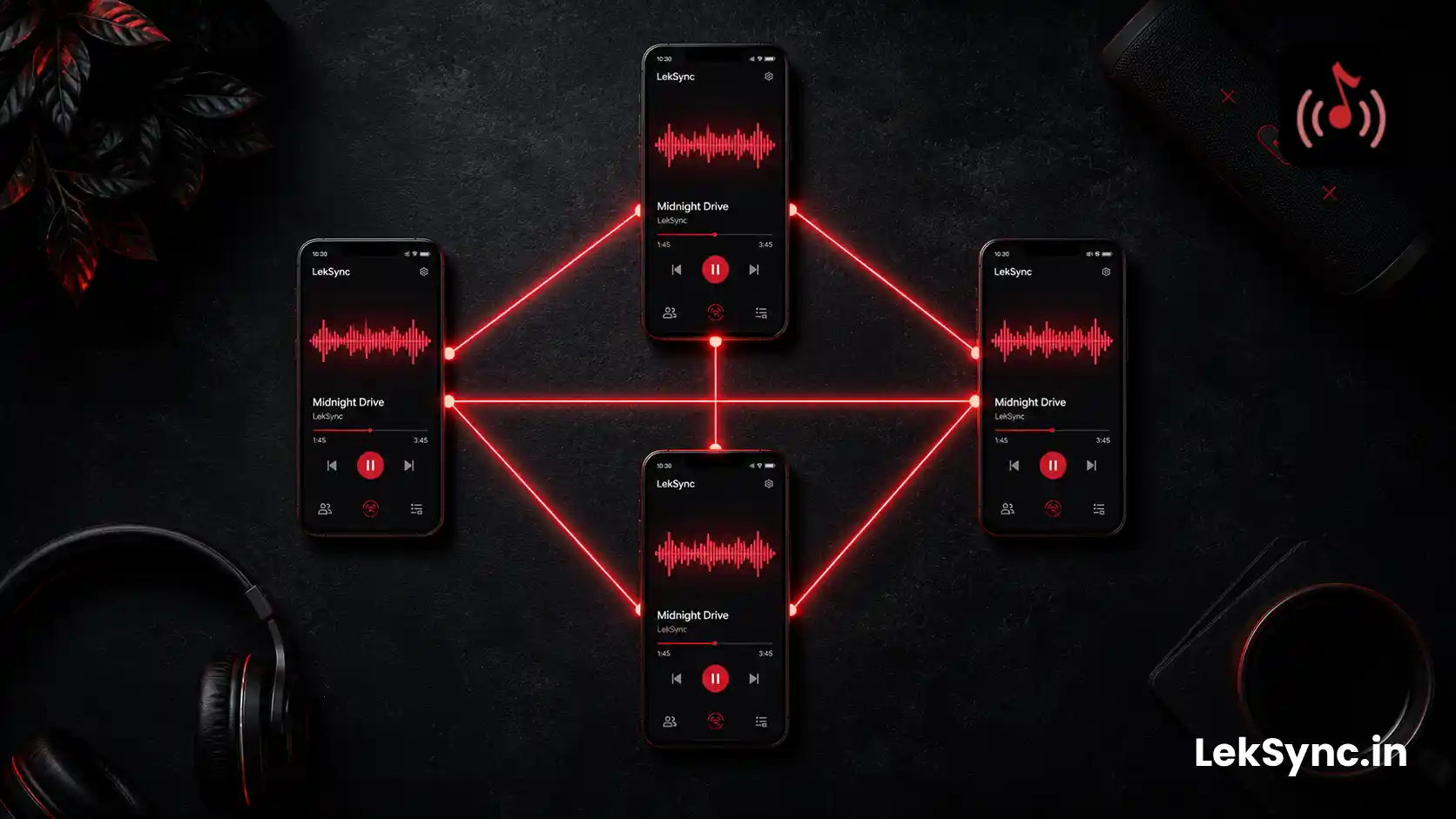
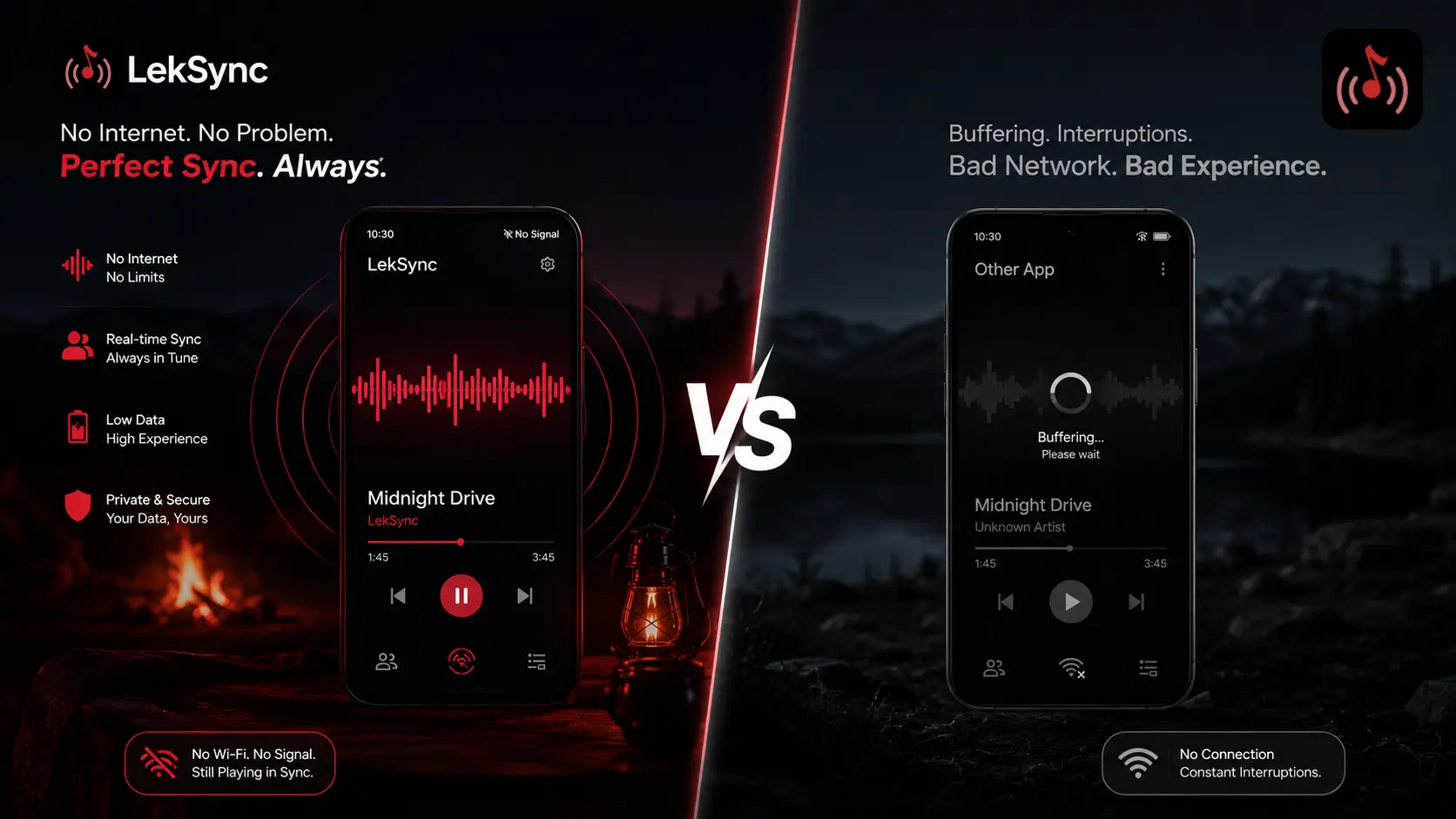
- A Wi-Fi hotspot enabled on the host phone — or the campus Wi-Fi (if all attendees are on the same network)
- Attendees with their own phones and earbuds
Setup steps
- Enable hotspot on the host phone (or note the campus Wi-Fi network attendees should connect to).
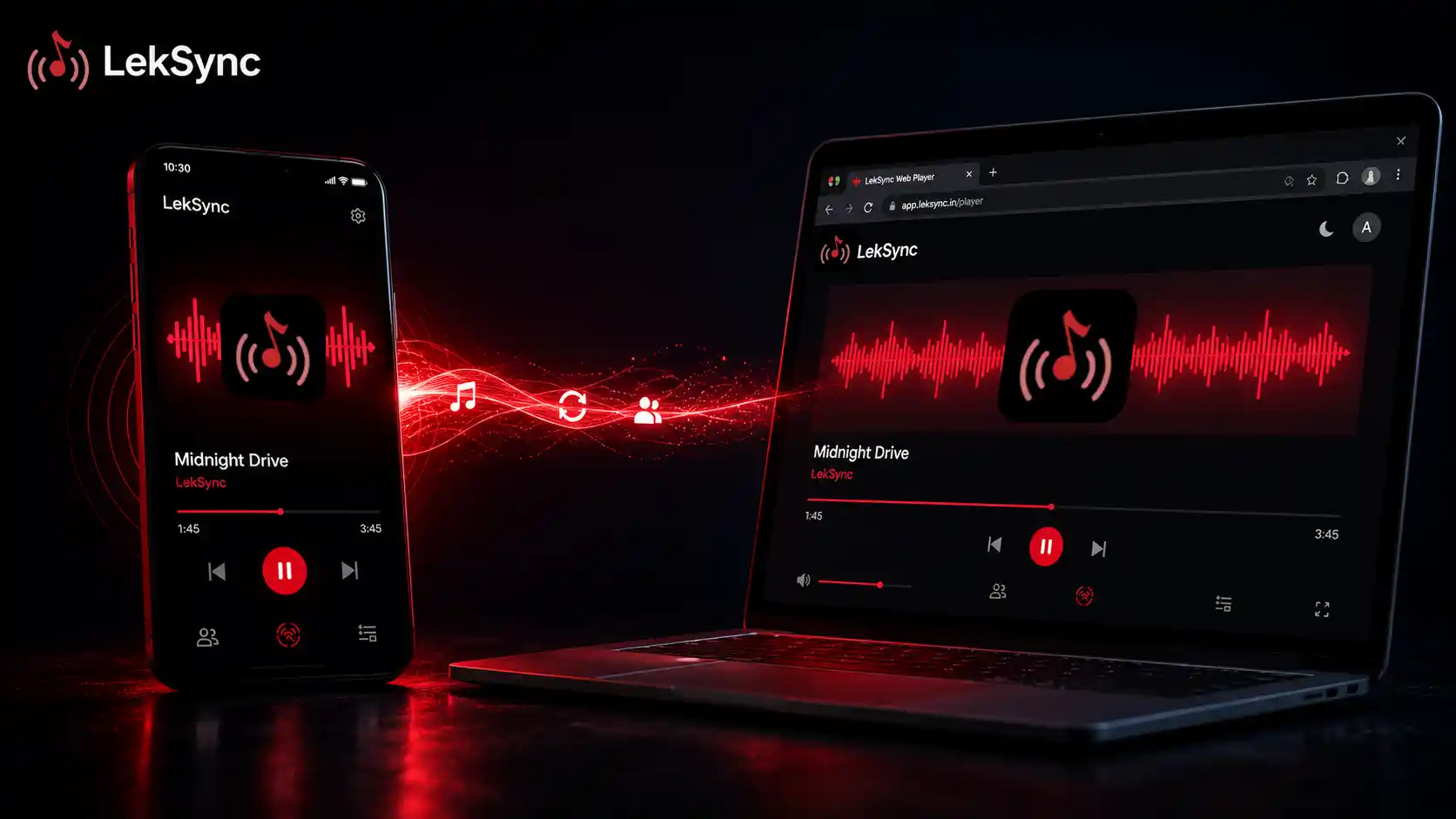
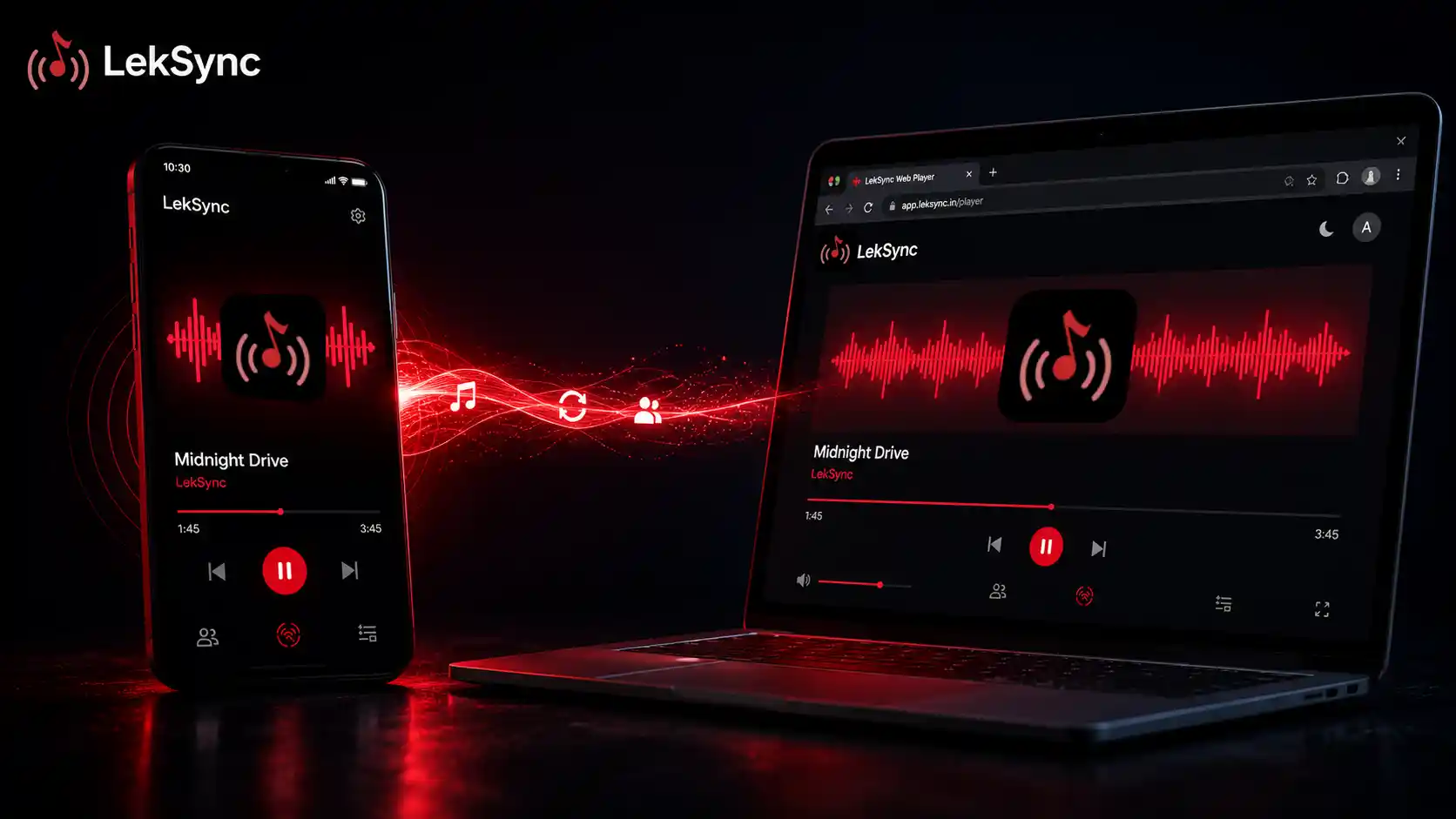
- Share the network name and the LekSync room code or the web link
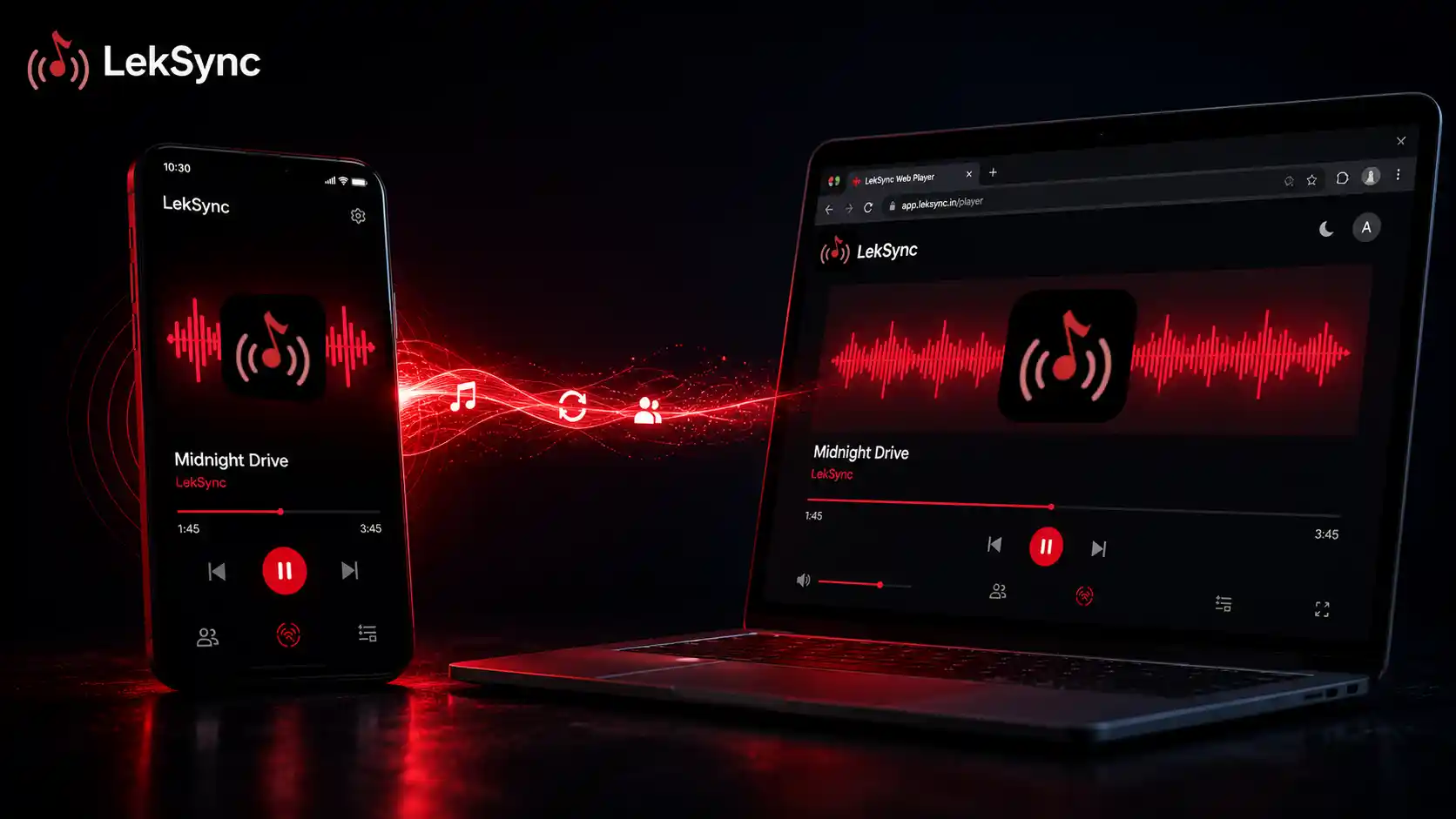
leksync.in/receiver/[code]— post it at the entrance, on a screen, or in the event group chat. - Attendees connect to the network, open the web link in their browser, and join. No app install required.
- Announce "earbuds in" and start the playlist.
Total tech setup time: under 5 minutes.
During the event
- Use LekSync's live mic feature to make announcements between tracks — all attendees hear your voice through their earbuds.
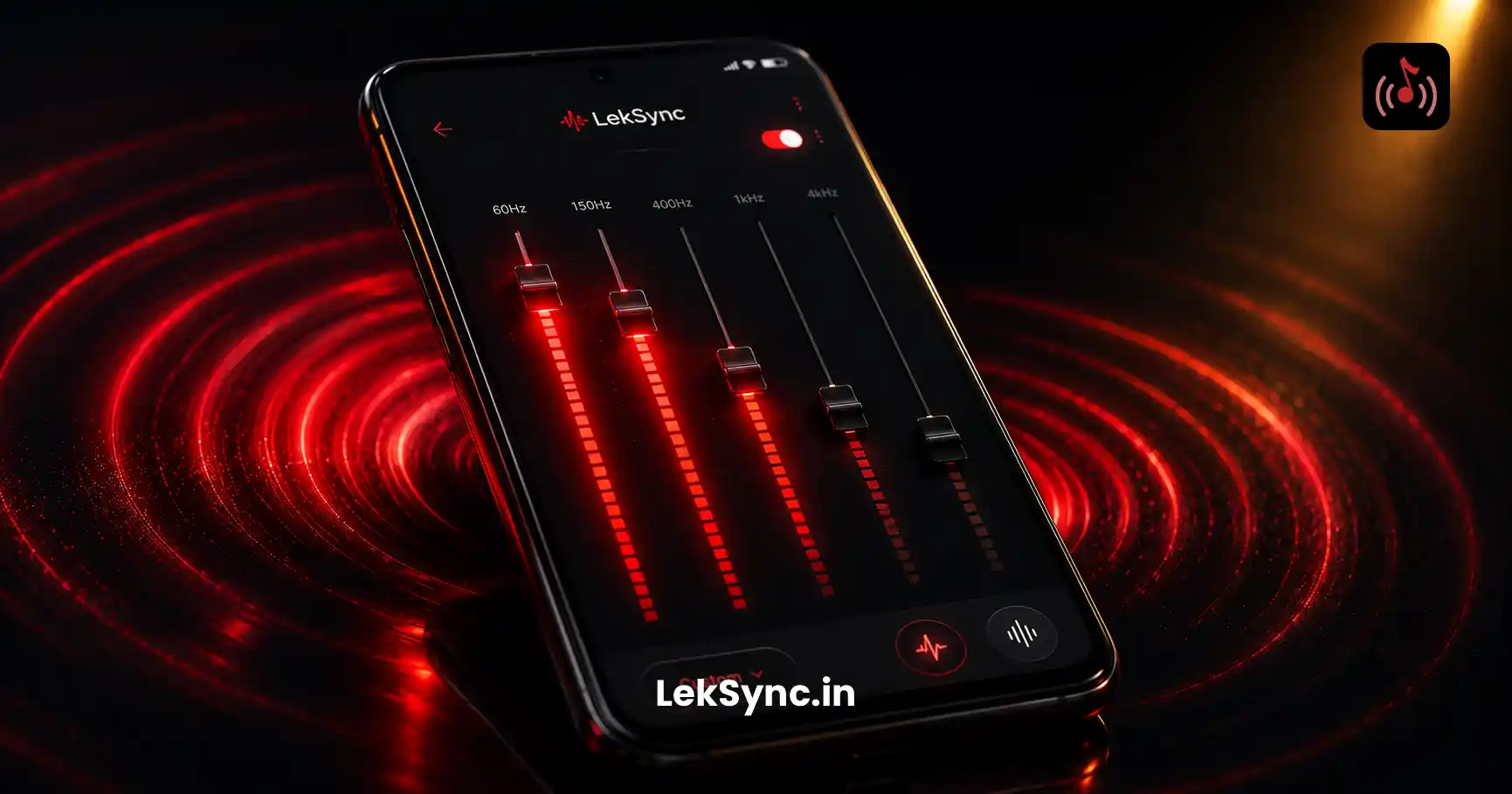
- Use the built-in equalizer to bass-boost the dance tracks. All receivers get the same audio profile.
- Change tracks from the host phone. All receivers switch simultaneously.
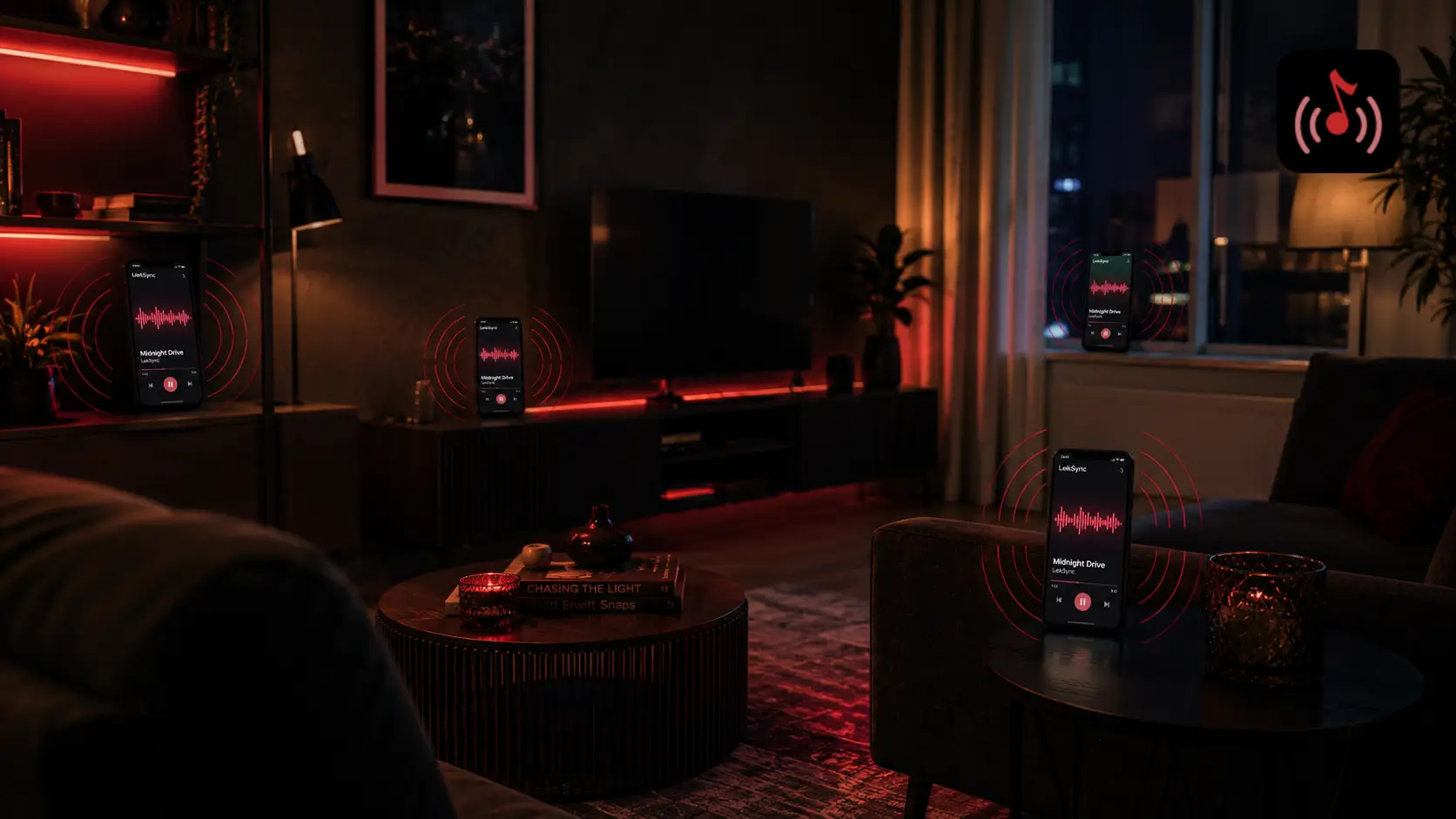
- If some attendees don't have earbuds, place one or two phones on a small portable speaker in a corner — this gives them a way to participate.
Building a Strong Silent Disco Playlist for Campus
The playlist needs to serve a mixed audience — people who are there to dance and people who are more socially than musically engaged. Structure it with energy peaks and valleys:
- First 30 minutes: medium-energy crowd-pleasers. Songs most people know. Let the crowd settle in and get comfortable.
- Peak block (middle hour): highest-energy tracks. Popular dance music, Bollywood bangers, EDM drops. This is when the visual of people dancing silently hits its best form.
- Wind-down: slower tracks, familiar ballads, chill remixes. People who are leaving gradually go; the remaining crowd gets more intimate.
The Visual Effect Is Its Own Marketing
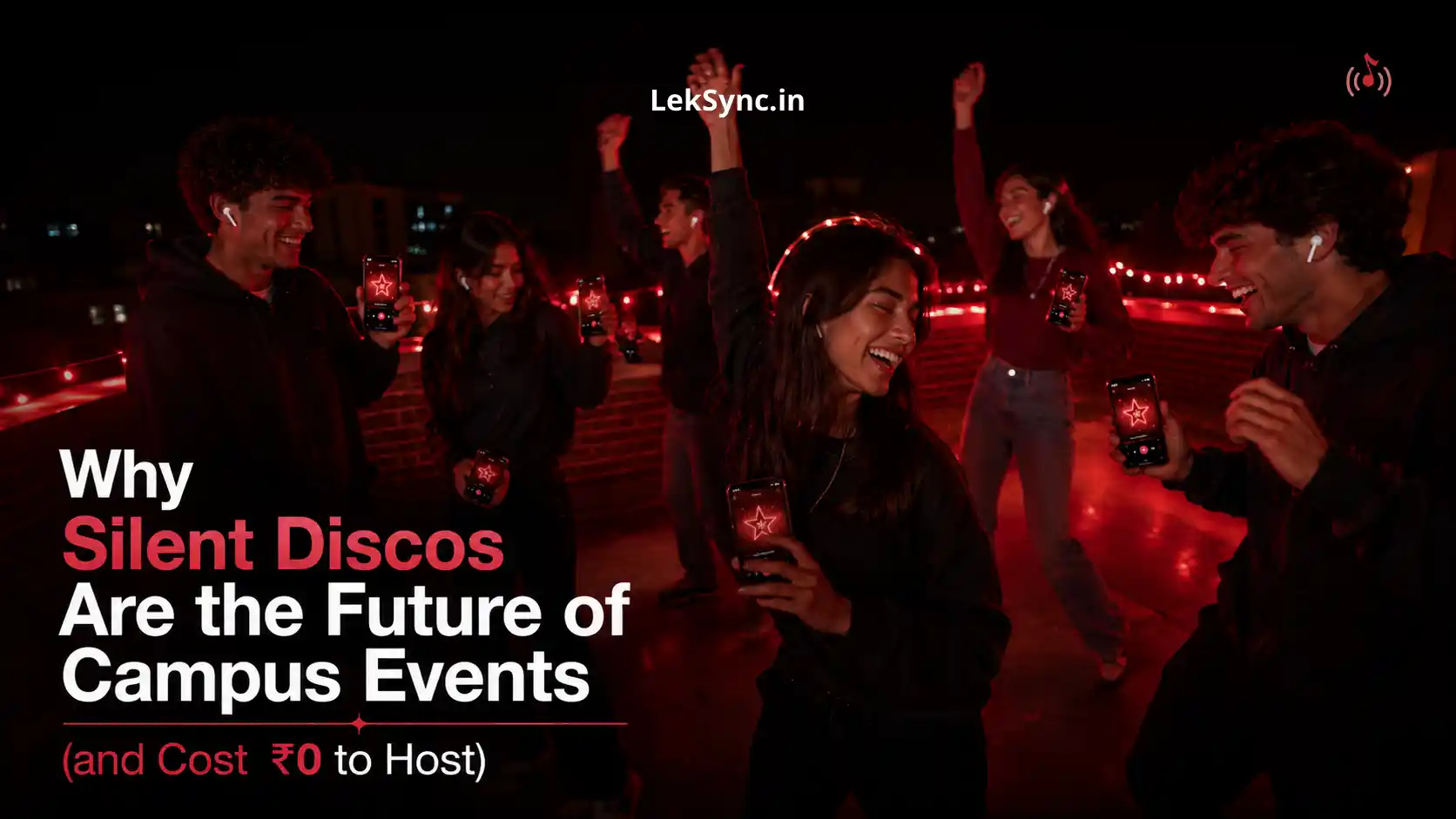
A silent disco in a campus space looks extraordinary to anyone walking past. People dancing to nothing. Someone singing loudly to a song nobody else can hear. A crowd moving together in silence. It stops people in their tracks — and most of them join.
Budget zero for social media — someone in the crowd will post a video within the first 10 minutes. The format is inherently shareable. Plan for this: choose a visually striking location, have good lighting if possible, and let the weirdness of the format work for you.
Start This Semester
If your student club or committee hasn't done a silent disco yet, pitch one for the next event cycle. The barrier to entry is zero: one phone, a playlist, and a group chat with a room code. The ceiling — a campus event remembered for years — is genuinely achievable.
For the full setup walkthrough with tips specific to the phone-and-hotspot format, see our complete silent disco guide.
Download LekSync free on Google Play. Attendees can join without installing anything at leksync.in/receiver.